
 English
 简体中文
 Italiano
 Polski
 Español
 Deutsch
 Türkiye
 Дистриб'ютори в Україні
 United States
 Brasileiro
 Chile
 日本語
As more PV plants integrate energy storage systems (ESS), system architecture is playing an increasingly important role in determining project costs, construction complexity, land requirements and long-term operational value.
In conventional configurations, PV and ESS are often connected separately on the medium-voltage side, each requiring its own step-up equipment. While widely adopted, this approach can result in duplicated transformers and switchgear, additional civil works, a larger site footprint and higher upfront investment.
Chint Power’s Low Volt Coupling architecture offers an alternative. By connecting PV and ESS on the same low-voltage AC side, both systems can share key electrical infrastructure and operate under coordinated control. This approach is well suited to both new-build projects and existing PV plants looking to integrate storage while minimising additional grid connection complexity.
This article explores three low volt coupling PV and ESS configurations designed to meet different project scales and retrofit requirements, followed by a real-world application in Germany.
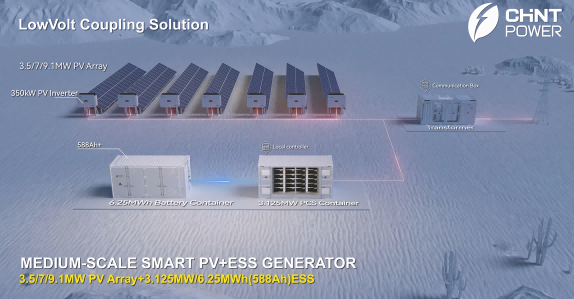
Scheme 1: 3.5 / 7 / 9.1 MW PV Array + 3.125 MW / 6.25 MWh (588 Ah) ESS
This medium-scale configuration integrates a 3.125 MW / 6.25 MWh ESS with 350 kW PV inverters on a shared low volt AC bus. Designed for both new-build projects and PV retrofits, the architecture balances power capacity, storage duration, equipment integration and efficient use of site space.
The 3.125 MW / 6.25 MWh ESS incorporates high-capacity 588 Ah battery cells, enabling higher energy density and a more compact system layout. It can store surplus solar energy and discharge it when needed, in response to plant dispatch requirements or electricity market conditions.
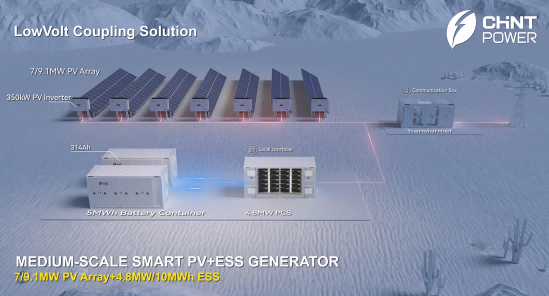
Scheme 2: 7 / 9.1 MW PV Array + 4.8 MW / 10 MWh ESS
This configuration combines a 7 / 9.1 MW PV array with a 4.8 MW / 10 MWh ESS, making it particularly well suited to medium-scale utility PV plants with demanding requirements for power regulation, peak-to-off-peak energy shifting and participation in electricity markets.
With 4.8 MW of storage power and 10 MWh of energy capacity, the ESS provides approximately two hours of storage duration. This enables a rapid response to fluctuations in PV output while allowing energy to be shifted effectively between different operating periods.
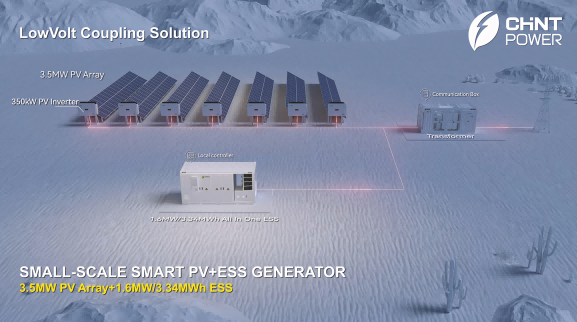
Scheme 3: 3.5 MW PV Array + 1.6 MW / 3.34 MWh ESS
Designed for smaller-scale projects and space-constrained sites, this configuration offers a compact, highly integrated low-voltage coupling solution. It combines a 1.6 MW / 3.34 MWh integrated AC/DC energy storage unit with PV inverters.
Advantages of Low-Voltage Coupling Solutions
Shared Transformer Infrastructure:
By allowing PV and ESS to share the same transformer, low volt coupling reduces the need for duplicated equipment, helping to lower equipment costs, simplify installation and minimise the additional site footprint required for energy storage.
Circulating-Current Suppression:
The ESS incorporates built-in circulating-current suppression functionality to mitigate the risk of circulating currents when multiple units operate in parallel, supporting stable, long-term operation following a retrofit.
Market-Responsive Dispatch:
The ESS can store solar energy during periods of lower electricity prices and discharge it when prices are more favourable. This enables plant operators to move beyond immediate solar export towards more flexible energy shifting and participation in electricity markets.
Real-World Application: 8 MW / 20 MWh Low-Voltage Coupling Retrofit in Germany
The practical benefits of low volt coupling are demonstrated by a project at a farm in Germany, where an existing PV installation is being retrofitted with an 8 MW / 20 MWh energy storage system (ESS).
The project integrates two storage blocks: one rated at 4.8 MW / 10 MWh and the other at 3.125 MW / 10 MWh. Together, they enable the plant to store surplus solar energy and export it at more favourable times, rather than exporting all generated electricity immediately.
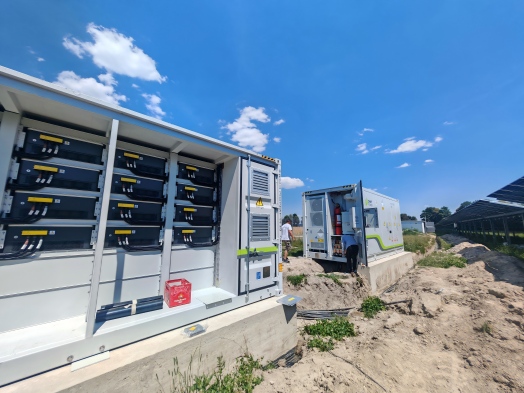
4.8 MW / 10 MWh ESS: With approximately 2.1 hours of storage duration, this block offers higher charging and discharging power, enabling a rapid response to fluctuations in PV output, electricity price signals and dispatch requirements.
3.125 MW / 10 MWh ESS: With approximately 3.1 hours of storage duration, this unit offers longer-duration energy storage, providing greater flexibility to shift solar energy between different electricity trading periods.
Together, the two systems combine higher-power responsiveness with longer-duration energy shifting. Through low volt coupling, the PV and ESS can share key electrical infrastructure, helping to reduce duplicated equipment and the extent of retrofit work while enhancing the operational value of the existing PV installation.
Built for Smart PV + ESS Generator
Low volt coupling is about more than simply adding battery storage to a PV plant. Its value lies in integrating PV and energy storage through a more efficient system architecture, while selecting the right configuration to meet each project’s grid connection capacity, site constraints, retrofit requirements and commercial objectives.
Chint Power offers a range of configurations for both new-build and retrofit projects, helping to reduce duplicated equipment, simplify construction, minimise the site footprint and enable more flexible energy management strategies.
Fewer duplicated components. Less civil work. Greater flexibility. More value from existing PV assets.
CHINT POWER: To Build the Leading Smart PV+ESS Generator


 沪ICP备10211377号-1